Florida’s 2025 condominium legislation is the most significant overhaul of the state’s condo laws in decades — and for property managers and HOA boards, the implications go well beyond financial reserves and structural inspections. Buried inside House Bill 913, which took effect July 1, 2025, are new obligations that directly affect how your community must approach safety, access control, and accountability.
If you manage or serve on the board of a condominium association in Miami-Dade or Broward County, here is what you need to know — and how to ensure your security program keeps pace with the law.
Why 2025 Changed Everything for Florida Condo Boards
The 2025 reforms were a direct response to the Champlain Towers South collapse in Surfside, which forced the state to reckon with decades of deferred maintenance, inadequate reserves, and insufficient governance accountability. House Bill 913 signed by Governor DeSantis rewrote the rules for how condominium associations operate, inspect their buildings, fund their reserves, and govern themselves.
For security professionals and property managers, the most relevant changes involve structural safety inspections, required documentation, board accountability, and vendor oversight — all of which intersect with how your community deploys and manages security services.
What Florida’s 2025 Condo Laws Actually Require
1. Milestone Structural Inspections
Under HB 913, any condominium building that is three stories or taller must undergo mandatory milestone structural inspections. Buildings 25 years or older that are located within three miles of the coast must complete their first inspection. Buildings that are 30 years or older elsewhere in the state also fall under this requirement.
What this means for security: During inspection periods, buildings often experience disruptions to common-area access, elevator function, and building systems. This is precisely when slip-and-fall incidents, unauthorized access, and liability exposure increase. Many boards are adding temporary security during active inspection and remediation phases to manage contractor access and document who enters the building.
2. Structural Integrity Reserve Studies (SIRS)
All condominium associations that were in existence on or before July 1, 2022, and are controlled by owners (not the developer), must complete a Structural Integrity Reserve Study. The deadline for many associations was extended to December 31, 2025, to allow additional time.
Associations must now budget with fully funded reserves based on these studies — which means special assessments are becoming more common as buildings catch up on years of underfunded accounts. Security budgets frequently fall under this broader operational planning.
3. Online Records and Website Requirements
Any Florida condominium association with 100 or more units must maintain a website or secure mobile application by January 1, 2025. Required documents include governing documents, annual budgets, financial reports, meeting minutes, and contact information for board members and property managers.
For security-related purposes, this requirement extends to documentation of incidents, access logs, and vendor contracts. If your association is audited or faces a dispute related to security, your records infrastructure must now support that kind of disclosure.
4. Stricter Board Governance and Vendor Oversight
HB 913 introduced term limits for board members of condominium associations — a maximum of eight consecutive years unless two-thirds of unit owners vote to extend a member’s service. More importantly, the law now bars any community association manager whose license has been revoked from holding ownership, employment, or leadership roles within a management firm for a period of five years.
Boards must verify credentials before entering into or continuing management contracts. The same scrutiny now applies to security vendors. Associations that have not verified their security company’s Florida license, insurance, and credentials face governance risk under the new transparency requirements.
5. Enhanced Financial Disclosures
The annual financial statement must now list any reserve loans, lines of credit, or special assessments the association has taken on. Boards are expected to act with best efforts when investing reserve and operating funds. Security contracts, when structured as multi-year agreements, should now be reflected accurately in your financial disclosures.
The Security Gap Most Condo Boards Miss
The 2025 laws created an environment of significantly greater board accountability — and with that accountability comes greater exposure when safety incidents occur. Many condo associations in Miami-Dade and Broward still rely on a single unarmed guard at a front desk, or no dedicated security at all, under the assumption that the building’s locked entry system is sufficient.
That assumption has grown more dangerous.
Here is what Florida’s updated legal framework means for your security liability:
Access control is no longer a suggestion. When a stranger enters a building and causes harm, the first question attorneys ask is: what was your access control protocol? A licensed security company with documented patrol logs and access records is a fundamental layer of protection — not a luxury.
Contractor access during inspections and repairs requires oversight. With milestone inspections now mandated, buildings are experiencing elevated contractor traffic. Security personnel who document who enters and exits the building during these phases can protect the association from contractor liability, vandalism, and theft.
Incident documentation is now required, not discretionary. If something happens in a common area and your board cannot produce incident reports, patrol logs, or camera records, you are exposed. Professional security companies provide this documentation as a standard deliverable.
What Condo Security Looks Like in Practice
A properly structured condo security program for a Miami-Dade or Broward building in 2025 typically includes:
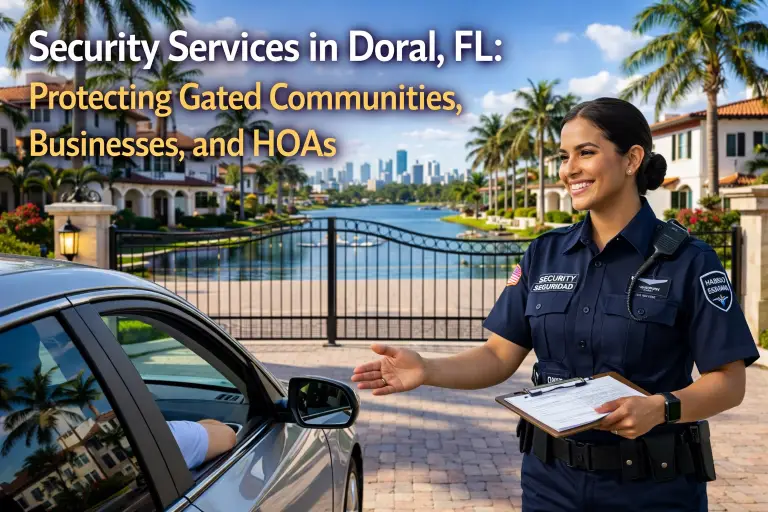
Lobby and Entry Control: A licensed, uniformed guard manages visitor sign-in, verifies credentials for contractors and vendors, and monitors access points during business hours and into the evening. This is the most visible deterrent and the most documented layer of your access control record.
Patrol Rounds: For larger complexes, guards conduct interior and exterior patrols on a documented schedule. Patrol logs are maintained and available for board review. This practice is especially important during milestone inspection and construction phases.
Incident Reporting: Every interaction, unusual occurrence, or safety event is logged in a written incident report. These records are your board’s documentation in the event of a legal dispute.
After-Hours and Weekend Coverage: Miami-Dade and Broward condos with high seasonal occupancy often experience their greatest risk during off-peak hours when management staff is absent. Overnight and weekend coverage ensures continuity.
Emergency Response Coordination: Guards are trained to alert emergency services, manage building evacuations if needed, and serve as the first point of contact when a resident emergency occurs.
How Truman Security Serves Florida Condo Communities
Truman Security has served condo associations across Miami-Dade and Broward County since 2014. Our guards are licensed under Florida law, insured, and trained for the specific dynamics of residential condo security — access control, resident relations, contractor oversight, and incident documentation.
Every Truman Security engagement includes detailed incident logs and patrol reports that your board can use for compliance documentation, insurance purposes, and resident communications. We work with property managers and board presidents directly to align our scope of service with your building’s specific layout, occupancy patterns, and risk profile.
We understand the 2025 legislative environment and what it means for boards that are now under greater scrutiny. Our job is to make sure your security program reflects that professionalism.
Frequently Asked Questions
Is a condo association legally required to have security guards in Florida?
Florida law does not mandate security guards at all condominium associations. However, the board’s fiduciary duty to provide a reasonably safe environment for residents — now reinforced by HB 913’s governance requirements — means that a history of safety incidents combined with no security measures can constitute negligence. Consult your association attorney for guidance specific to your building.
What should we look for when hiring a security company for our condo?
Verify the company’s Florida Class B or Class BB security agency license, confirm they carry general liability and workers’ compensation insurance, and ask for references from other condo associations in Miami-Dade or Broward. Under HB 913’s new vendor oversight provisions, your board should document this verification.
How do we document security services for our required financial disclosures?
Your security contract should be listed as an operational expense in your annual budget. If you have a multi-year agreement, it should be disclosed as a contractual obligation. Ask your security provider for quarterly service summaries you can include in board documentation.
Can the same guard handle other building duties during their shift?
No. Under Florida regulations, security guards on duty may not be assigned other tasks. A guard who is simultaneously performing maintenance or front-desk administrative work is not providing compliant security coverage.
How quickly can Truman Security deploy guards to our building?
For planned engagements, we typically begin within a few business days of contract execution. For emergency situations — such as an urgent safety concern or fire watch need — we can typically deploy within hours. Contact us directly for availability.
Protect Your Building. Satisfy Your Board. Stay Compliant.
Florida’s 2025 condo laws raised the bar for everything boards are accountable for — and security is no exception. Truman Security provides licensed, documented, professionally managed security services for condo communities across Miami-Dade and Broward County.
Get a Free Security Assessment
Truman Security · Licensed Security Guard Services · Miami-Dade & Broward County · License No. B1300316 · (305) 400-0989